





 September 21, 2026
 5 min read
Clear vision plays an important role in how children learn, move around and interact with the world. However, children do not always realise that their vision is unclear, particularly if they have never experienced anything different.
A child may adapt to a vision problem without mentioning it, which is why regular checks and attention to changes in their behaviour are important. Children can have their eyesight assessed at any age, and they do not need to be able to read or even speak to complete an age-appropriate vision assessment.
Why Are Children’s Eye Examinations Important?
A children’s eye examination assesses more than how clearly your child can read letters on a chart. It can also examine how the eyes focus, move and work together, whether glasses may be needed and whether there are any concerns about their developing vision.
Good vision in both eyes develops throughout early childhood. Certain problems, such as a squint or lazy eye, are best identified as early as possible while the visual system is still developing. A child may have clearer vision in one eye than the other without showing an obvious sign or complaining that anything is wrong.
In Ireland, children are offered routine eye checks from birth through early childhood, with eyesight screening also offered through the school health programme in junior infants. However, parents should not wait for a scheduled screening appointment if they have concerns about their child’s eyes or vision.
“Children do not always know when their vision is unclear, so changes in their behaviour can be just as important as what they tell us.”
Signs Your Child May Have a Vision Problem
Some children will say that they cannot see clearly, while others may show more subtle signs in their everyday behaviour.
Signs to look out for can include:
- Sitting very close to the television
- Holding books, tablets or objects close to their face
- Frequently rubbing, blinking or screwing up their eyes
- Closing or covering one eye when looking at something
- Tilting or turning their head to see more clearly
- One eye appearing to turn inwards or outwards
- Regular headaches or complaints of tired eyes
- Losing their place while reading
- Avoiding reading, writing, drawing or close-up activities
- Difficulty catching a ball or with other hand-eye coordination tasks
- Appearing unusually clumsy
- Difficulty concentrating during school or close work
These signs do not always mean that your child has a vision problem, but they are a good reason to arrange an assessment. Children may also have a vision concern without displaying any noticeable symptoms.
Children may not always say that their vision is unclear, but changes in reading, concentration or everyday behaviour can provide useful clues.
What Happens During a Children’s Eye Examination?
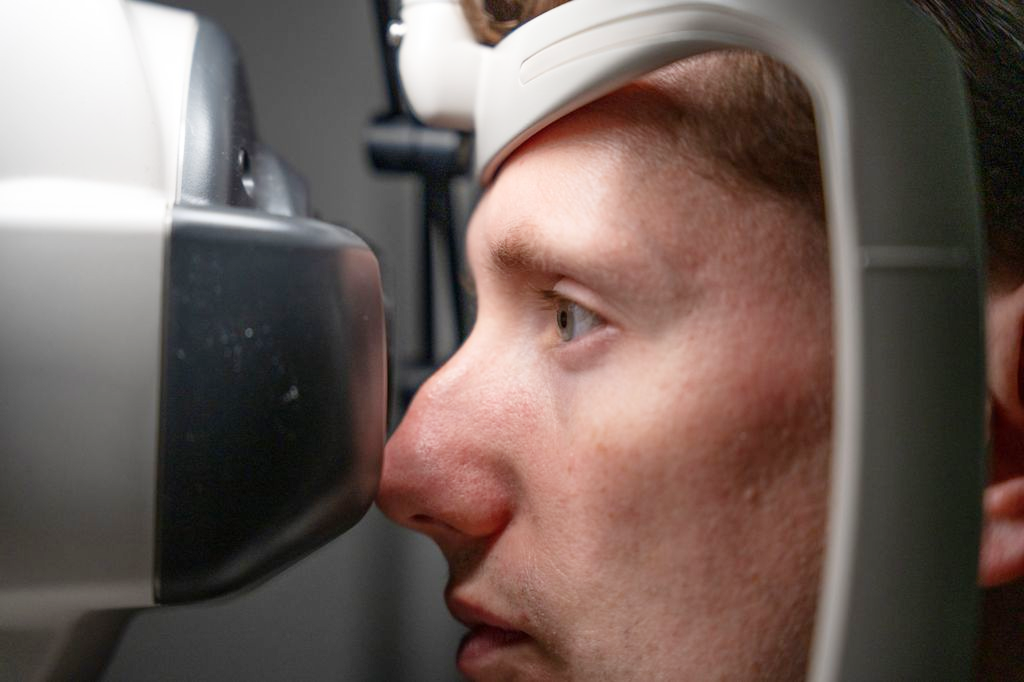
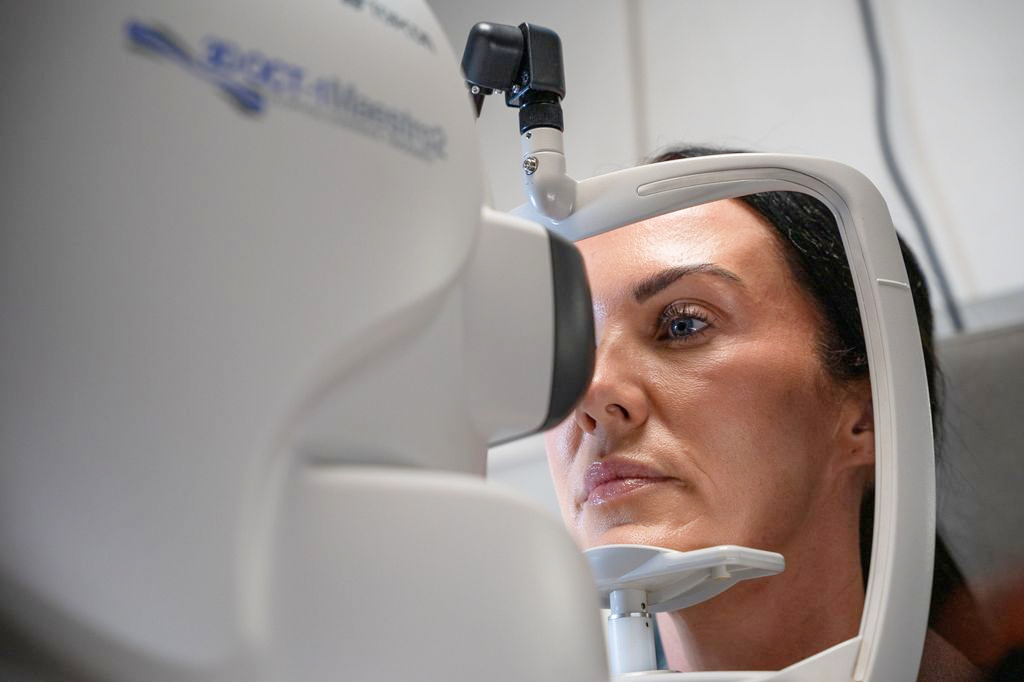
The examination will be adapted to your child’s age, communication and level of confidence. Younger children do not need to recognise letters or explain exactly what they can see.
Your optometrist may use pictures, matching games, lights and other age-appropriate techniques to assess your child’s vision. The appointment may include checking:
- How clearly each eye can see
- Whether the eyes are properly aligned
- How the eyes move and work together
- How your child focuses at different distances
- Whether glasses may be needed
- The general health and development of the eyes
Your optometrist may also ask about your child’s general health, development, family eye history and whether you or their teachers have noticed any changes in reading, concentration or behaviour.
The aim is to make the experience comfortable and reassuring. Allowing your child time to settle and explaining each step in an age-appropriate way can help them feel more confident during the assessment.
When Should You Book an Eye Examination?
You can arrange an eye examination at any age if you have concerns about your child’s vision. You do not need to wait until they can read, start school or receive a school screening.
Consider arranging an appointment if:
- You notice any of the signs described above
- One eye appears to turn inwards or outwards
- Your child frequently closes or covers one eye
- They regularly complain of headaches, tired eyes or blurred vision
- Reading or close work is becoming difficult
- There is a family history of childhood vision problems, a squint or needing strong glasses at a young age
- A teacher raises concerns about reading, concentration or coordination
- Your child has missed a scheduled vision screening
- You simply feel that something has changed
School vision screening is useful, but it is not the same as a complete eye examination. An optometrist can carry out a broader assessment of how clearly each eye sees, whether the eyes work comfortably together and whether further monitoring or care may be needed.
Seek prompt professional or medical advice if your child experiences a sudden change or loss of vision, significant eye pain, an eye injury or a very red and painful eye.